
Stomach & food pipe
Gastritis & ulcers
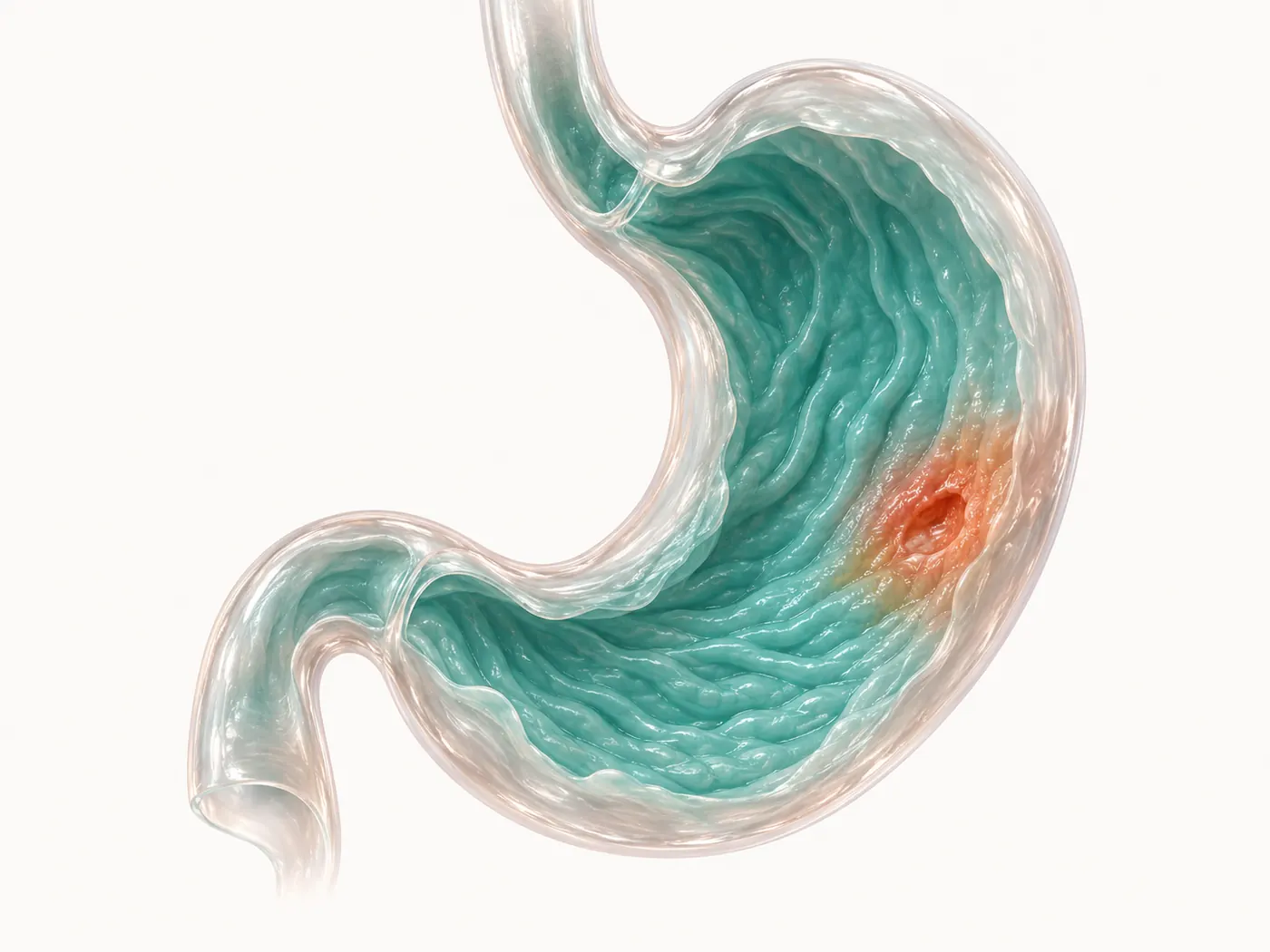
Gastritis is inflammation of the stomach lining, and an ulcer is a sore in the lining of the stomach or the first part of the small intestine (duodenum). Both are common, and most get better once the cause, often H. pylori infection or painkillers, is found and treated.
Also called: gastric problem, stomach pain, stomach ulcer, peptic ulcer, stomach burning
Common symptoms
- Burning or gnawing pain in the upper tummy
- Pain that gets better or worse with food
- Feeling full quickly or heavy after meals
- Nausea or vomiting
- Bloating and burping
- Loss of appetite
- Waking at night with stomach pain
Causes and risk factors
- H. pylori, a common stomach infection
- Painkillers (NSAIDs) and aspirin, especially when taken often or without food
- Alcohol and smoking
- Severe illness, major surgery or burns (stress ulcers)
- Some other medicines, such as steroids or blood thinners taken together with painkillers
- Irregular meals and very spicy food may worsen symptoms, though they are not usually the main cause of ulcers
See a doctor straight away if you have
- Vomiting blood or material that looks like coffee grounds
- Black, tarry or maroon stools
- Sudden, severe tummy pain that does not go away, especially with a hard tummy
- Dizziness, fainting or feeling very weak
- Repeated vomiting or not being able to keep food down
- Losing weight without trying
How it is diagnosed
Your doctor will ask about your symptoms, medicines and habits. An upper GI endoscopy is the most reliable way to see gastritis or an ulcer, and small tissue samples (biopsies) can be taken painlessly during it to check for H. pylori and rule out other problems.
Tests that may help
- Consultation and examination
- Upper GI endoscopy with biopsy
- H. pylori breath, stool or biopsy test
- Blood tests such as haemoglobin

Treatment options
Your treatment is planned after a consultation, around your tests and daily routine.
- 01
Acid-reducing medicines
Your doctor may prescribe medicines that lower stomach acid so the lining can heal. Ulcers usually need a course of several weeks.
- 02
Treating H. pylori
If H. pylori is found, a course of antibiotics along with acid-reducing medicine is given, followed by a test to confirm it has cleared.
- 03
Stopping or changing painkillers
If painkillers are the cause, your doctor will advise stopping them or switching to a safer option. Do not stop prescribed heart or blood-thinning medicines without asking your doctor.
- 04
Endoscopic treatment for bleeding
A bleeding ulcer can often be treated during an endoscopy to stop the bleeding. This is done in hospital as an emergency.
Diet and daily habits
- Eat regular meals and avoid long gaps without food.
- Choose simple, home-cooked food such as idli, curd rice, dal and soft vegetables while you heal.
- Avoid alcohol and stop smoking.
- Do not buy painkillers over the counter for aches; ask your doctor for a safer choice.
- Cut down on very spicy and oily food and on strong tea or coffee if they upset your stomach.
- Complete the full course of any medicines your doctor prescribes, even if you feel better early.
Questions patients ask
Book a 15‑minute visit
At the clinic or online, Monday to Saturday. Pick a time and the front desk will confirm.
This page is general information reviewed by Dr. Tejaswini Tumma. It does not replace a consultation.