Stomach & food pipe
Acidity & GERD
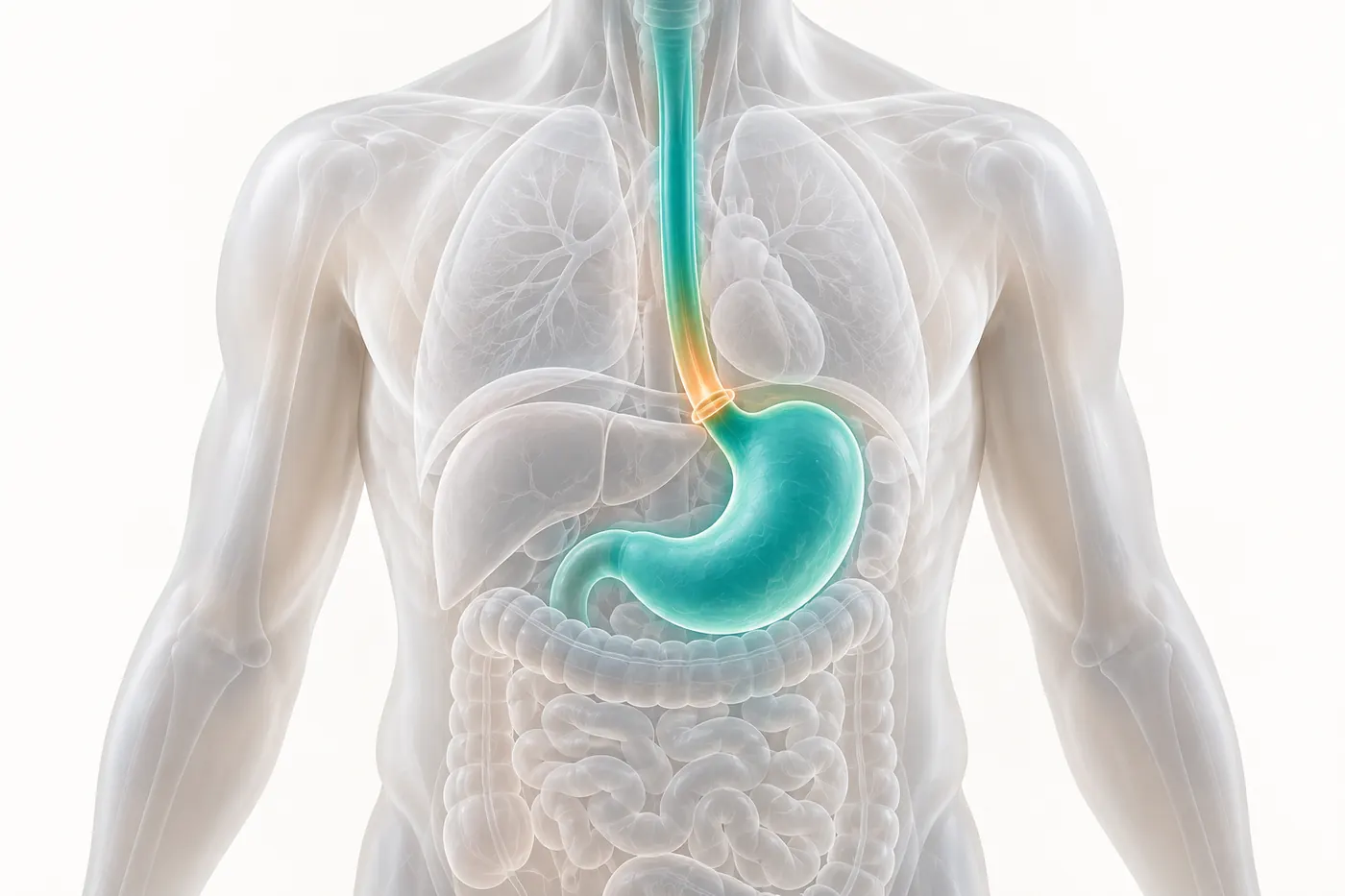
Acidity happens when stomach acid flows back up into the food pipe, causing burning in the chest or throat. When this happens often, doctors call it GERD (gastro-oesophageal reflux disease), and it can usually be controlled well with simple changes and treatment.
Also called: gas trouble, gas problem, heartburn, acid reflux, chest burning after food, indigestion
Common symptoms
- Burning in the chest (heartburn), often after meals
- Sour or bitter taste in the mouth
- Food or sour fluid coming back up into the throat
- Frequent burping or a bloated feeling
- Symptoms worse when lying down or bending
- Dry cough, hoarse voice or throat clearing, especially in the morning
- A feeling of something stuck in the throat
Causes and risk factors
- Large, spicy or oily meals, and late dinners followed by lying down
- Extra body weight, especially around the tummy
- Too much tea, coffee, fizzy drinks, alcohol or smoking
- Painkillers (NSAIDs) bought over the counter
- Hiatus hernia, where part of the stomach slips up above the diaphragm
- Pregnancy
- Stress and irregular meal times, which can make symptoms feel worse
See a doctor straight away if you have
- Difficulty or pain while swallowing, or food sticking on the way down
- Vomiting blood or material that looks like coffee grounds
- Black, tarry stools
- Losing weight without trying, or loss of appetite
- Chest pain with sweating, breathlessness or pain spreading to the arm or jaw: go to an emergency department first, as this may be the heart
- New acidity symptoms starting after the age of about 50
How it is diagnosed
Most people with typical acidity are diagnosed from their symptoms, and your doctor may start treatment straight away. If symptoms do not settle, keep coming back, or you have any warning signs, an upper GI endoscopy lets the doctor look directly at the food pipe and stomach and check for inflammation, ulcers or other causes.
Tests that may help
- Consultation and symptom review
- Upper GI endoscopy
- H. pylori test, if needed
- Blood tests such as haemoglobin, if needed
- pH or manometry study in selected cases

Treatment options
Your treatment is planned after a consultation, around your tests and daily routine.
- 01
Diet and lifestyle changes
Smaller meals, an early dinner and not lying down soon after eating help many people. Losing a little weight often makes a clear difference.
- 02
Acid-reducing medicines
Your doctor may prescribe medicines that reduce stomach acid for a set period. It is best to take them as advised and review them with your doctor rather than continuing on your own for years.
- 03
Treating the underlying cause
If tests show an H. pylori infection, an ulcer or a medicine that is causing the problem, treating that cause helps symptoms settle.
- 04
Specialist care for difficult cases
If symptoms continue despite treatment, further tests may be needed, and a few people are referred for procedures or surgery after discussion.
Diet and daily habits
- Eat your dinner at least two to three hours before going to bed.
- Choose smaller, regular meals instead of one or two heavy ones.
- Cut down on very spicy, oily and fried food, and notice which foods trigger your symptoms.
- Limit tea and coffee, and avoid alcohol, smoking and fizzy drinks.
- Raise the head end of your bed a little if symptoms come at night.
- Avoid tight belts and clothes around the tummy.
- Do not take painkillers for body aches without asking a doctor first.
Questions patients ask
Book a 15‑minute visit
At the clinic or online, Monday to Saturday. Pick a time and the front desk will confirm.
This page is general information reviewed by Dr. Tejaswini Tumma. It does not replace a consultation.