Liver & gallbladder
Gallstones
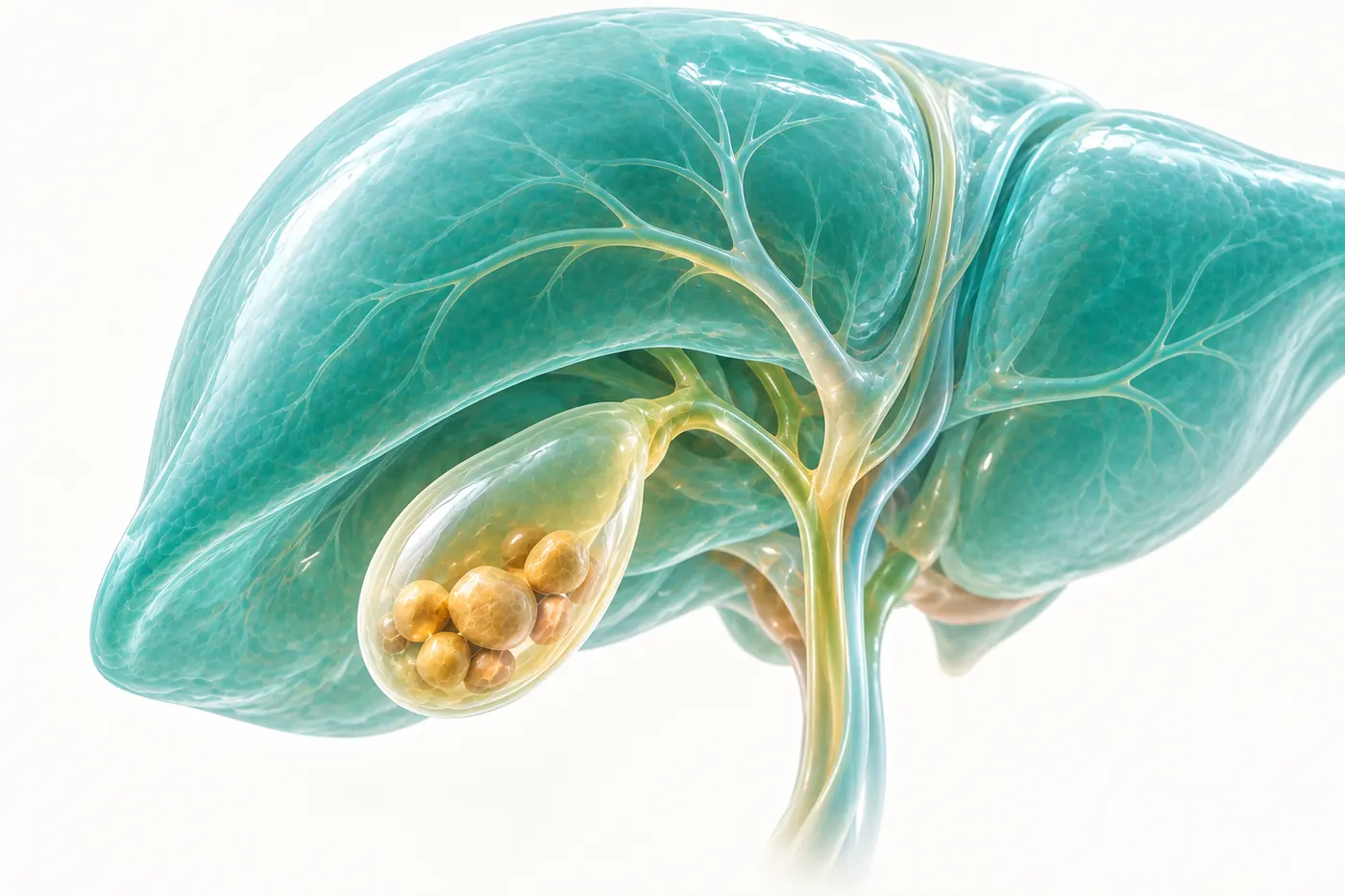
Gallstones are hard stones that form in the gallbladder, a small pouch under the liver that stores bile. Many cause no trouble, but stones that cause pain or complications usually need treatment.
Also called: gallbladder stones, stones in gallbladder, bile duct stones
Common symptoms
- Pain in the upper right or middle of the abdomen, often after a heavy or oily meal
- Pain that can spread to the right shoulder or back
- Pain lasting from half an hour to a few hours
- Nausea or vomiting with the pain
- Bloating and discomfort after meals
- Often no symptoms; found on an ultrasound
Causes and risk factors
- Being overweight, or losing weight very quickly
- Being a woman, especially after pregnancies
- Diabetes
- Increasing age
- A family history of gallstones
- Some blood conditions that break down red blood cells faster
See a doctor straight away if you have
- Severe abdominal pain that does not settle within a few hours
- Fever with chills along with abdominal pain
- Yellow eyes or skin, or dark urine
- Severe upper abdominal pain spreading to the back, with vomiting
- Repeated vomiting and being unable to keep fluids down
How it is diagnosed
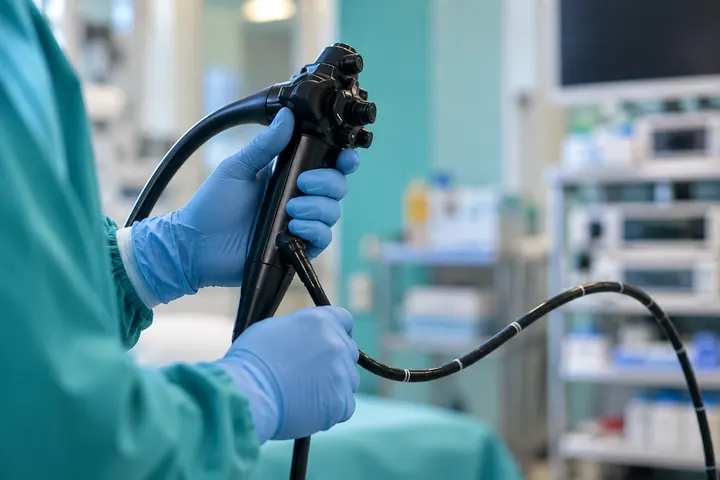
An ultrasound of the abdomen is the main test for gallstones. Blood tests check for infection and whether the liver or pancreas is affected. If a stone may have slipped into the bile duct, your doctor may suggest an MRCP or EUS. ERCP is used to remove stones from the bile duct.
Tests that may help
- Ultrasound abdomen
- Liver function tests (LFT)
- Complete blood count
- Serum amylase or lipase
- MRCP if a bile duct stone is suspected
Treatment options
Your treatment is planned after a consultation, around your tests and daily routine.
- 01
Watchful waiting for silent stones
If gallstones were found by chance and cause no symptoms, your doctor may suggest simply keeping an eye on them.
- 02
Gallbladder removal
If stones cause pain or complications, removing the gallbladder, usually by keyhole (laparoscopic) surgery, is the standard treatment. Your doctor will refer you to a surgeon.
- 03
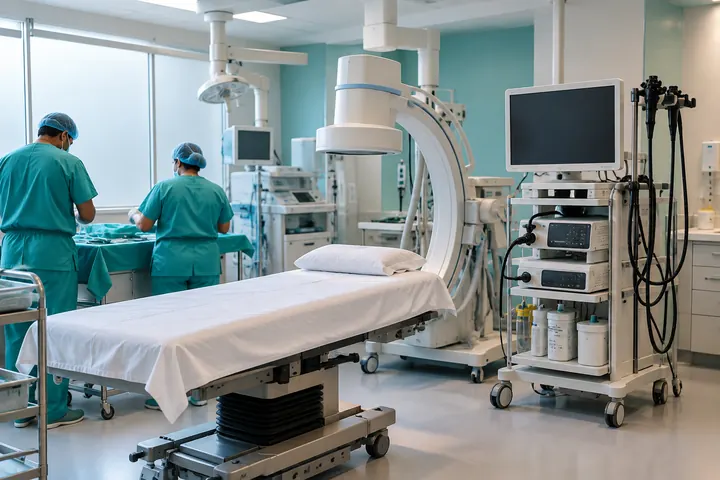
ERCP for bile duct stones
Stones that have moved into the bile duct can cause jaundice, infection or pancreatitis. They are removed with ERCP, often before gallbladder surgery.
- 04
Treating an attack
A painful attack is treated with pain relief and sometimes fluids and antibiotics in hospital if there is infection.
Diet and daily habits
- Eat regular, moderate meals rather than skipping meals and then eating a large one.
- Cut down on fried foods, ghee-heavy dishes and oily snacks, which can trigger pain.
- Include vegetables, dal, millets like jowar and ragi, and fruits for fibre.
- Lose extra weight slowly and steadily; very fast weight loss can form stones.
- Stay active with a daily walk.
- Do not rely on stone-dissolving remedies; they do not reliably clear gallstones.
Questions patients ask
Book a 15‑minute visit
At the clinic or online, Monday to Saturday. Pick a time and the front desk will confirm.
This page is general information reviewed by Dr. Tejaswini Tumma. It does not replace a consultation.