
Liver & gallbladder
Hepatitis B & C
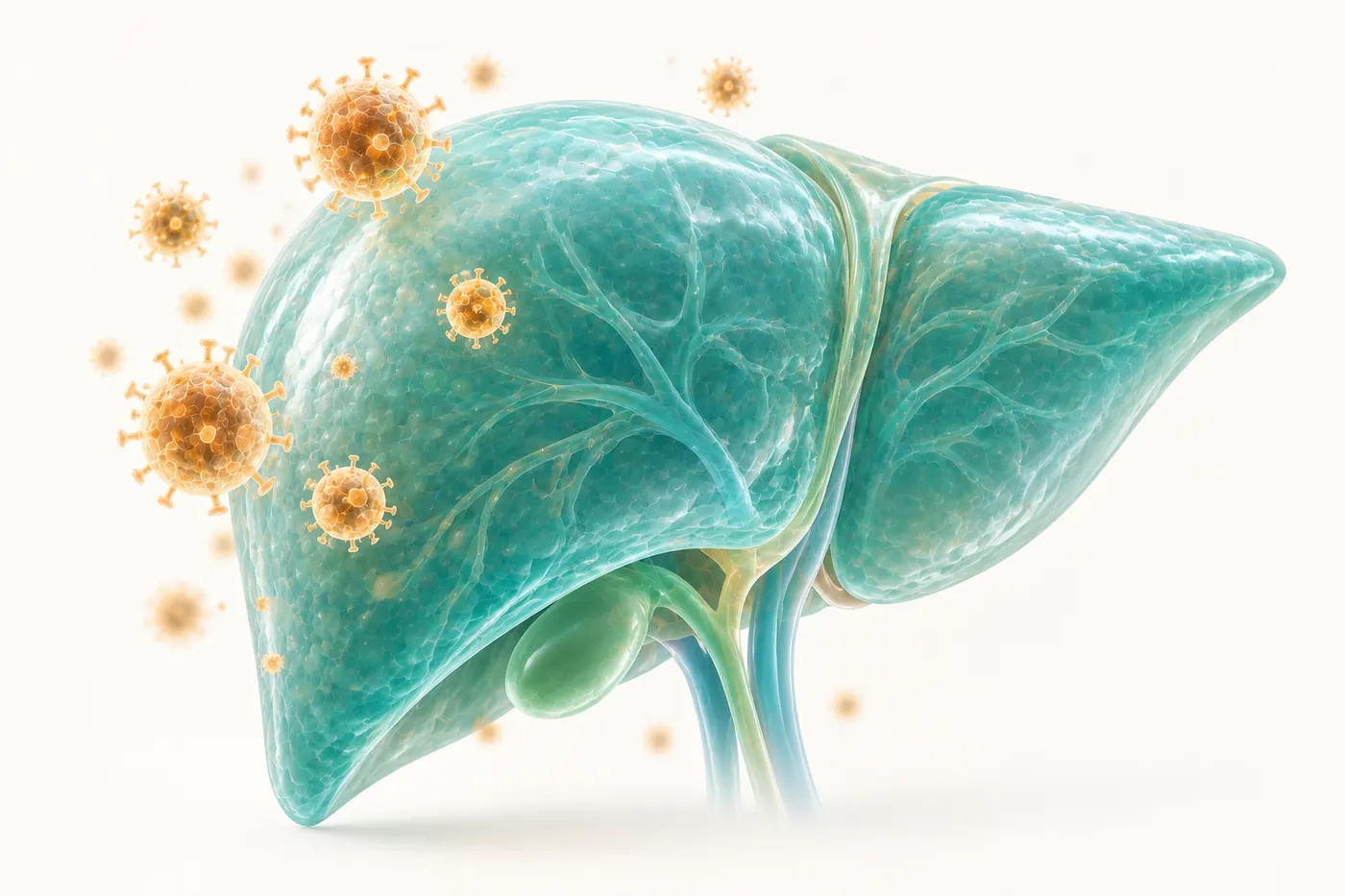
Hepatitis B and C are viruses that infect the liver and can quietly damage it over many years. Today hepatitis C can be cured with tablets, and hepatitis B can be controlled long-term and prevented with a vaccine.
Also called: hepatitis B positive, HBsAg positive, hepatitis C, liver infection
Common symptoms
- Often no symptoms for years
- Found on a routine, pregnancy or pre-surgery blood test
- Tiredness and loss of appetite
- Nausea or discomfort in the upper right abdomen
- Yellow eyes or skin, dark urine
- Raised liver enzymes (SGPT/ALT) on a blood test
Causes and risk factors
- Hepatitis B passing from mother to baby at birth
- Unsafe injections or reused needles and syringes
- Blood transfusions, especially before blood was routinely screened
- Tattoos, piercing, or shared razors and blades done without sterile equipment
- Unprotected sex with an infected partner (mainly hepatitis B)
- Dialysis or dental procedures where infection control is poor
- Sharing toothbrushes or needles for drug use
See a doctor straight away if you have
- Yellow eyes or skin that is getting deeper
- Confusion, unusual drowsiness or behaviour change
- Vomiting blood or passing black, tarry stools
- Rapidly increasing swelling of the abdomen
- Repeated vomiting and being unable to eat or drink
How it is diagnosed
A simple blood test shows whether you have hepatitis B or C. If it is positive, more tests check how active the virus is and whether it has damaged your liver. A FibroScan measures liver stiffness without a needle and helps your doctor decide whether you need treatment. Sometimes an endoscopy is advised to look for swollen veins (varices) if there is advanced scarring.
Tests that may help
- HBsAg (hepatitis B test)
- Anti-HCV (hepatitis C test)
- HBV DNA or HCV RNA (viral load)
- HBeAg and anti-HBe
- Liver function tests (LFT)
- Ultrasound abdomen


Treatment options
Your treatment is planned after a consultation, around your tests and daily routine.
- 01
Hepatitis C: a course of tablets
Hepatitis C can be cured in most people with a course of oral medicines, usually taken for a few months. A blood test after treatment confirms the virus is gone.
- 02
Hepatitis B: long-term control
Not everyone with hepatitis B needs medicines. If the virus is active or the liver is affected, your doctor may suggest daily tablets that keep the virus under control and protect your liver.
- 03
Regular monitoring
Blood tests, ultrasound and FibroScan at intervals your doctor advises help catch changes early, including liver cancer screening where needed.
- 04
Protecting your family
Family members and partners should be tested for hepatitis B and vaccinated if they are not protected. Newborns of mothers with hepatitis B need the vaccine and protective injection soon after birth.
Diet and daily habits
- Avoid alcohol completely, as it speeds up liver damage.
- Do not stop hepatitis B medicines on your own, as the virus can flare up.
- Do not take herbal or unregulated remedies without checking with your doctor.
- Do not share razors, toothbrushes, nail cutters or needles.
- Tell your dentist, doctor or dialysis unit that you have hepatitis.
- Get vaccinated against hepatitis A, and hepatitis B if you have hepatitis C, as your doctor advises.
Watch Dr. Tejaswini explain
Everything You MUST Know About Viral Hepatitis
Questions patients ask
Book a 15‑minute visit
At the clinic or online, Monday to Saturday. Pick a time and the front desk will confirm.
This page is general information reviewed by Dr. Tejaswini Tumma. It does not replace a consultation.