Liver & gallbladder
Liver cirrhosis
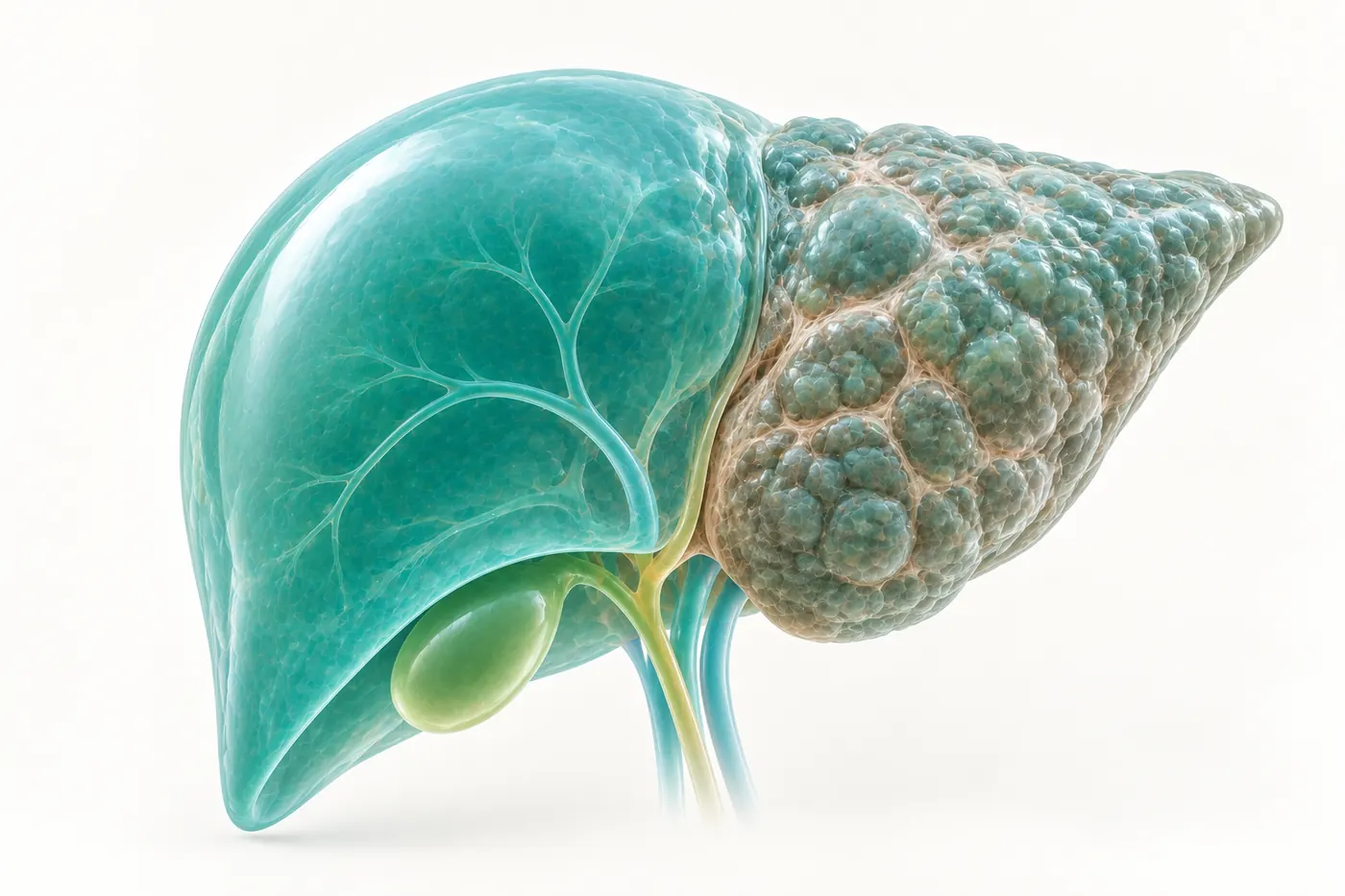
Cirrhosis is long-term scarring of the liver that builds up after years of damage from causes like alcohol, fatty liver or hepatitis. It cannot usually be undone, but with regular follow-up and treatment of the cause, many people live well for years.
Also called: liver damage, liver failure, water in stomach (ascites)
Common symptoms
- Tiredness, weakness and loss of muscle
- Swelling of the abdomen (ascites) or legs
- Yellow eyes or skin
- Loss of appetite and weight loss
- Easy bruising or bleeding
- Itching
- Forgetfulness, confusion or disturbed sleep
Causes and risk factors
- Long-term alcohol use
- Fatty liver linked to weight and diabetes
- Chronic hepatitis B or C
- Autoimmune liver disease
- Diseases of the bile ducts
- Inherited conditions such as excess iron or copper in the body
See a doctor straight away if you have
- Vomiting blood or passing black, tarry stools
- Confusion, unusual drowsiness or behaviour change
- Rapidly increasing swelling of the abdomen
- Fever or abdominal pain with swelling of the abdomen
- Deepening jaundice
- Passing very little urine
How it is diagnosed
Your doctor will use blood tests, an ultrasound and a FibroScan to assess how much scarring there is and how well your liver is working. Tests also look for the cause. An endoscopy checks for swollen veins (varices) in the food pipe or stomach, which can bleed, and these can be treated with banding.
Tests that may help
- Liver function tests (LFT)
- Complete blood count and PT/INR
- Kidney function and electrolytes
- Hepatitis B and C tests
- Ultrasound abdomen
- AFP (alpha-fetoprotein) blood test
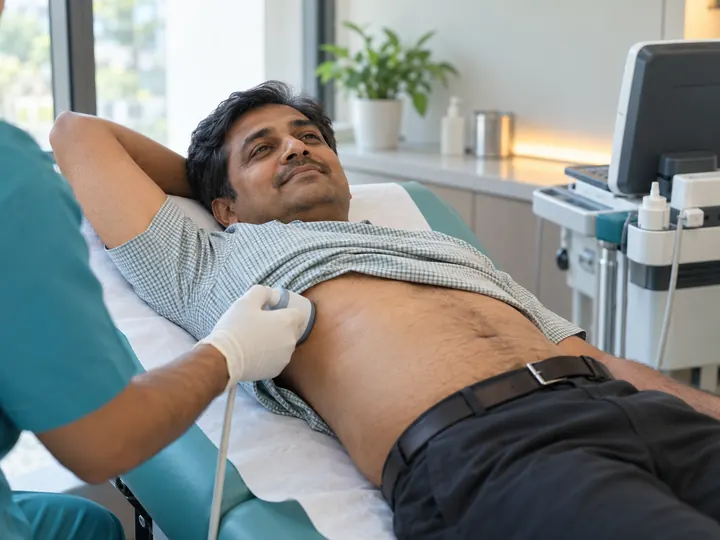 FibroScanA painless scan that measures liver fat and stiffness in minutes.10 min · None needed
 Upper GI endoscopyA thin camera looks at the food pipe, stomach and duodenum. About 10 minutes.10 min · Throat spray
 Variceal banding & glueTreats swollen veins in the food pipe and stomach to prevent bleeding.15–30 min · Sedation given
Treatment options
Your treatment is planned after a consultation, around your tests and daily routine.
- 01
Treating the cause
Stopping alcohol, treating hepatitis B or C, and controlling weight and diabetes can slow or stop further damage.
- 02
Screening for varices
Your doctor may advise an endoscopy to look for varices. If they are found, medicines or variceal banding can lower the risk of bleeding.
- 03
Liver cancer screening
People with cirrhosis have a higher risk of liver cancer. An ultrasound, often with an AFP blood test, is usually advised every 6 months.
- 04
Managing complications
Medicines can help control fluid in the abdomen and confusion. Sometimes fluid needs to be drained, which is done in hospital.
- 05
Liver transplant evaluation
If the liver is failing, your doctor may discuss referral to a liver transplant centre.
Diet and daily habits
- Stop alcohol completely; this is the single most important step.
- Eat enough protein from dal, eggs, fish, chicken, milk or paneer, and have a small bedtime snack.
- Cut down on salt, pickles, papads and packaged salty snacks if you have swelling.
- Avoid painkillers like ibuprofen and diclofenac, and herbal or unregulated remedies, unless your doctor approves.
- Keep a regular follow-up schedule and do not miss your 6-monthly scans.
- Get vaccinated against hepatitis A and B, and flu and pneumonia, as your doctor advises.
Watch Dr. Tejaswini explain
Liver Cirrhosis: Everything You Need to Know | Complete Guide
Questions patients ask
Book a 15‑minute visit
At the clinic or online, Monday to Saturday. Pick a time and the front desk will confirm.
This page is general information reviewed by Dr. Tejaswini Tumma. It does not replace a consultation.