Liver & gallbladder
Fatty liver
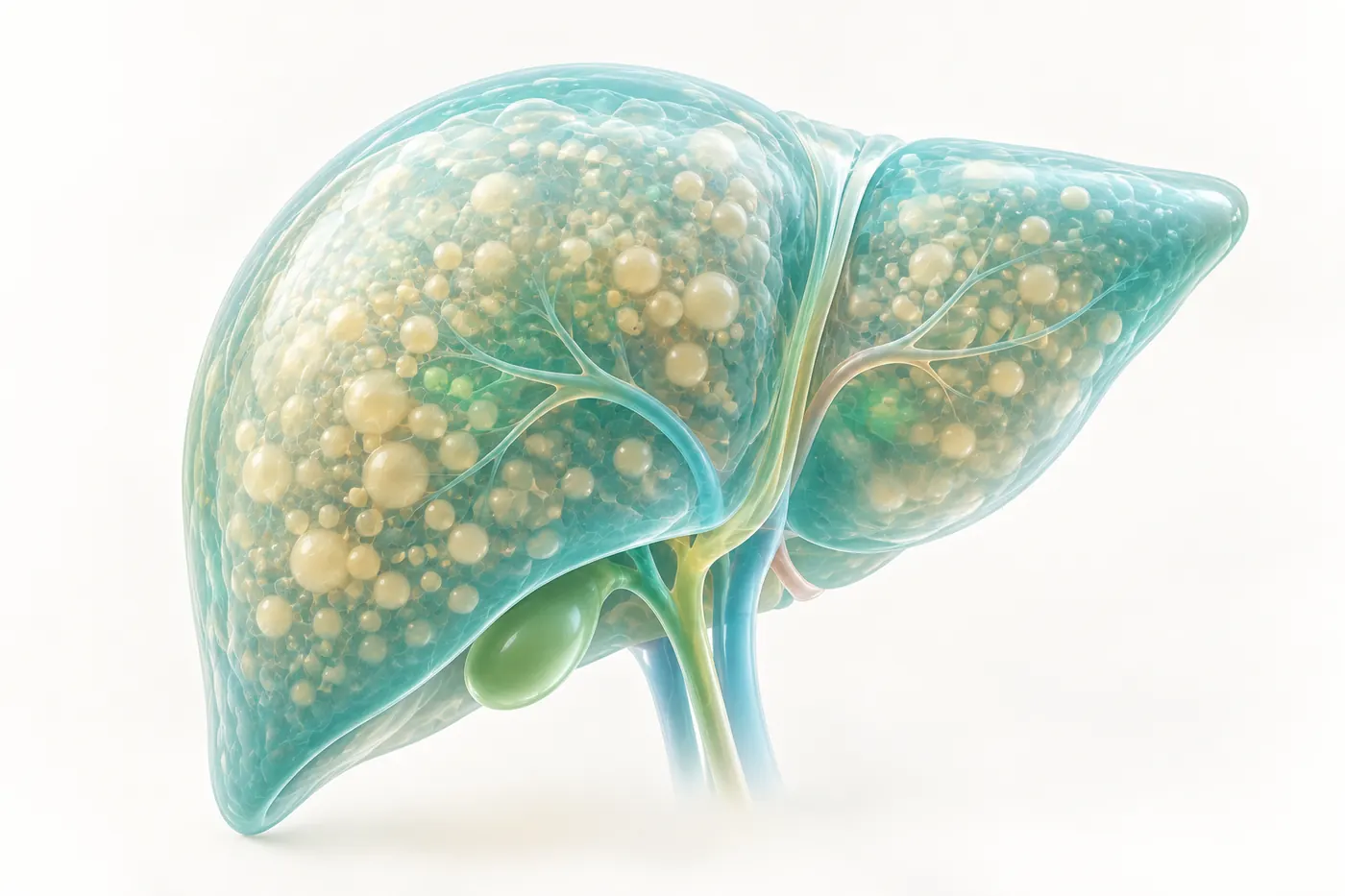
Fatty liver means extra fat has built up inside your liver cells. It usually causes no symptoms at first, but finding it early gives you a real chance to reverse it with simple, steady changes.
Also called: grade 1 fatty liver, grade 2 fatty liver, NAFLD, MASLD, high SGPT, liver fat
Common symptoms
- Often no symptoms at all
- Tiredness or low energy
- Dull heaviness or discomfort under the right ribs
- Weight gain, especially around the waist
- Mildly raised liver enzymes (SGPT/ALT) on a blood test
- Fatty liver reported on an ultrasound done for another reason
Causes and risk factors
- Extra weight, especially fat around the waist and belly
- Diabetes or prediabetes (high sugar)
- High cholesterol or triglycerides, and high blood pressure
- Drinking alcohol regularly
- A diet high in white rice, maida, sugar, sweets and fried snacks, with little activity
- Some medicines and an underactive thyroid in some people
See a doctor straight away if you have
- Yellow eyes or skin (jaundice)
- Swelling of your abdomen or legs
- Vomiting blood or passing black, tarry stools
- Confusion, unusual sleepiness or behaviour change
- Easy bruising or bleeding from the gums or nose
How it is diagnosed
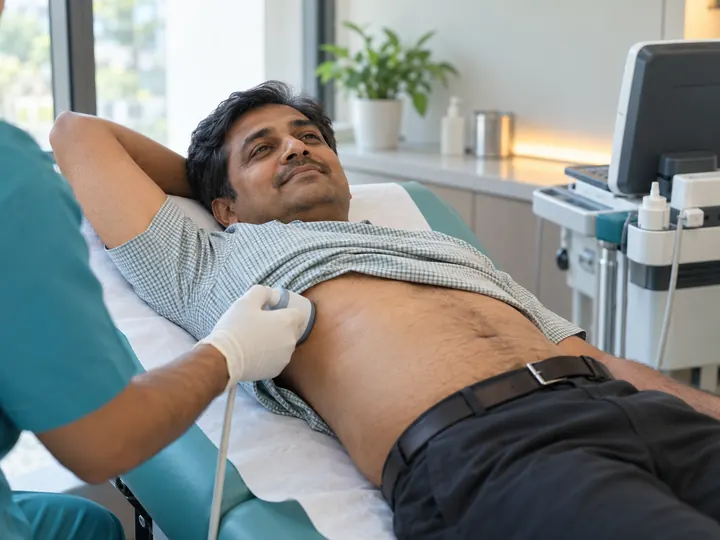
Fatty liver is usually first seen on an ultrasound. Your doctor will check your liver blood tests, sugar and cholesterol, and look for other causes such as hepatitis B or C. A FibroScan measures how much fat and stiffness (scarring) there is in your liver, without a needle, so your doctor knows how serious it is and can track progress.
Tests that may help
- Liver function tests (LFT)
- Fasting sugar and HbA1c
- Lipid profile (cholesterol)
- Hepatitis B and C tests
- Ultrasound abdomen
- FibroScan
Treatment options
Your treatment is planned after a consultation, around your tests and daily routine.
- 01
Steady weight loss
Losing even a modest amount of weight slowly, over months, can reduce liver fat. Crash diets are not recommended.
- 02
Control sugar, cholesterol and blood pressure
Keeping diabetes and cholesterol well controlled protects your liver as well as your heart. Your doctor may adjust your medicines.
- 03
Stop or cut down alcohol
Alcohol adds to liver damage. Your doctor may advise stopping completely, especially if there is scarring.
- 04
Regular follow-up
Repeat blood tests and a FibroScan help check whether your liver is improving. If there is significant scarring, your doctor will plan closer monitoring.
Diet and daily habits
- Eat less white rice, maida, sugar, sweets and fried snacks like samosas and bajjis.
- Fill half your plate with vegetables, and add dal, sprouts, eggs or fish for protein.
- Choose millets like jowar and ragi, or whole wheat, in place of some of your rice.
- Have whole fruits instead of fruit juices, soft drinks or packaged drinks.
- Walk briskly or exercise for about 30 minutes on most days.
- Avoid alcohol, and do not take herbal or unregulated “liver tonics” without asking your doctor.
Questions patients ask
Book a 15‑minute visit
At the clinic or online, Monday to Saturday. Pick a time and the front desk will confirm.
This page is general information reviewed by Dr. Tejaswini Tumma. It does not replace a consultation.