Test or procedure
Sigmoidoscopy
A flexible sigmoidoscopy checks the rectum and the lower part of the large bowel with a short, flexible camera. It is quicker than a colonoscopy, needs only a small enema to prepare, and is usually done without sedation.
What it is
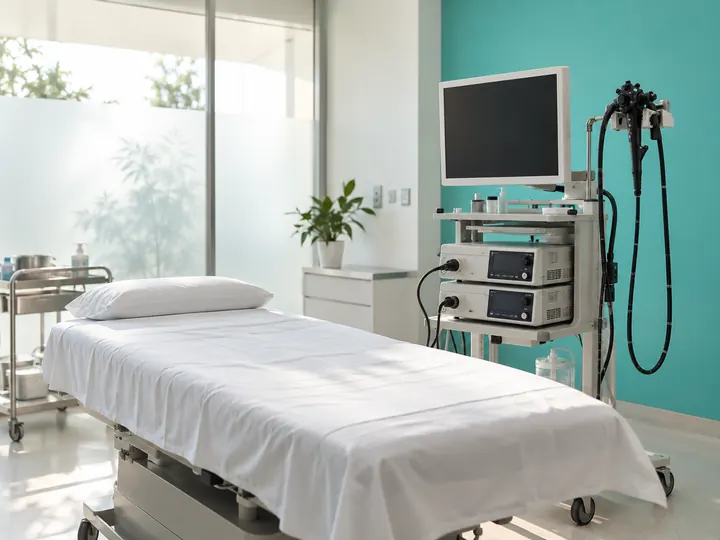
A sigmoidoscope is a thin, flexible tube with a light and a camera at its tip, shorter than a colonoscope. It is passed gently through the back passage to look at the rectum and the sigmoid colon, the lower part of the large bowel where many problems causing bleeding start. Dr. Tumma can see piles, fissures, inflammation, polyps and growths, and take small tissue samples (biopsies). It does not check the whole bowel, so a full colonoscopy may still be advised in some cases.
Why it is done
- Fresh blood in the stools or bleeding from the back passage
- Checking whether bleeding is from piles or a fissure, or from something higher up
- Pain, itching or a lump around the back passage
- A change in bowel habit where the doctor wants a quick first look
- Checking or following up colitis affecting the lower bowel
Before: how to prepare
- The preparation is lighter than for a colonoscopy: usually just a small enema given at the clinic, or at home as instructed, before the test.
- You can usually eat a light meal on the day. We will tell you if you need to fast.
- Bring a list of your medicines. Tell us if you take blood thinners or aspirin, in case a biopsy is needed; do not stop them on your own.
- Bring any previous colonoscopy, sigmoidoscopy or biopsy reports.
- If you choose sedation, come with an adult who can take you home.
On the day
Enema
A small enema is given to clear the lower bowel. You empty your bowel a few minutes later.
Getting ready
You change into a gown and lie on your left side with your knees drawn up.
The test
The scope is passed gently into the rectum and lower bowel. A little air is used to open the bowel, which may cause some cramping or a feeling of needing the toilet.
Biopsies, if needed
Small samples may be taken. You do not feel this.
Findings
The doctor explains what she saw straight away, and you can usually go home soon after.
After
- You can usually return to normal activities, food and work straight away.
- Some bloating and wind for a few hours are normal; passing the air relieves it.
- A small streak of blood can appear after a biopsy.
- If you had sedation, do not drive, operate machinery or sign important documents for the rest of the day.
- Call us or go to the nearest emergency if you have heavy bleeding, severe tummy pain, a swollen, hard tummy or fever.
Results. Dr. Tumma tells you what she saw right after the test. If biopsies were taken, they go to a lab and results usually take a few days. If anything needs a fuller look, she may advise a colonoscopy.
Risks, explained honestly
Common and mild
- Cramping and bloating for a short time
- A little spotting of blood after a biopsy
Rare but serious
- Bleeding that needs treatment
- A tear (perforation) in the bowel wall, which is rare but serious and may need surgery
- A problem higher up in the bowel can be missed, because only the lower part is checked
Where it is done
Available at Sun Care and at Kamineni Hospitals. Dr. Tejaswini will advise which suits you, for example when sedation or a hospital stay is needed.
Fees are shared when you book.
Questions patients ask
Used for
Other tests
- Upper GI endoscopy10 min
- Colonoscopy20–30 min
- FibroScan10 min
- ERCP30–60 min
- Endoscopic ultrasound20–45 min
- PolypectomyDuring colonoscopy
- Variceal banding & glue15–30 min
Book a 15‑minute visit
At the clinic or online, Monday to Saturday. Pick a time and the front desk will confirm.
This page is general information reviewed by Dr. Tejaswini Tumma. It does not replace a consultation.